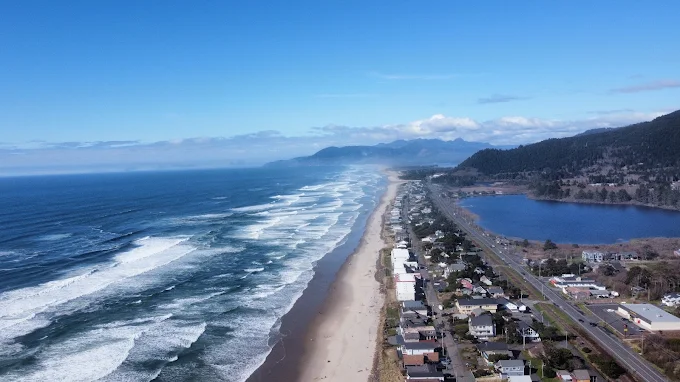
In Warrenton, the roof’s biggest enemy isn’t only rain. It’s wind. The flat, open ground of the Clatsop Plains lets winter storms reach homes at close to full strength, with few hills or tall stands of trees to slow them down. The roofs that hold up best here are installed for high wind from the eaves up, with sealed edges, corrosion-resistant fasteners, and a material chosen for how exposed the house really is. Whether you’re building new or replacing a roof that’s been through a few too many storms, here’s what Warrenton and Hammond homeowners should know.
Building or re-roofing in Warrenton? Call Apple Roofing at 360-942-7199 — we’re available 24/7 — or request an estimate online.
Why Warrenton Roofs Take a Different Kind of Beating
Drive from downtown Astoria to Warrenton and the landscape changes fast. Astoria’s homes are tucked into steep, wooded hillsides. Warrenton spreads out across low, flat ground between the Columbia River, the Skipanon River, and the Pacific. That openness is part of the town’s appeal — and it’s exactly why roofs here wear differently.
- Wind with nothing to stop it. Storms coming off the ocean and the Columbia River bar cross open fields, dunes, and wide streets. Roof edges, ridges, and rakes take sustained pressure rather than the gusty, sheltered conditions of a hillside lot.
- Wind-driven rain. When rain moves sideways, it finds every weak point: lifted shingle tabs, loose ridge caps, tired flashing around vents and chimneys.
- Salt air near the water. Homes in Hammond, near Fort Stevens, and along the dune side of the Clatsop Plains get marine air that’s hard on exposed metal — nails, flashing, vent caps, and screws.
- Wet ground. Low, flat lots mean water has to be moved away from the house on purpose. Gutters and downspouts are part of the roof system here, not an afterthought.
None of this means Warrenton roofs are doomed. It means the details that a builder might skip inland are the details that decide how long a roof lasts on the Clatsop Plains.
Building New in Warrenton? Get the Roof Right Before It’s Framed
Warrenton has a mix of older homes and newer subdivisions, and many people are still building — custom homes on the Clatsop Plains, homes in newer subdivisions, and owner-builder projects in Hammond. If that’s you, the best time to think about the roof is before the trusses arrive.
Roof shape and pitch for wind
Roof design affects how a house handles wind. A few things to discuss with your designer and roofer early:
- Hip vs. gable. Hip roofs (sloped on all four sides) generally present less flat surface to the wind than tall gable ends. Gables can absolutely work here — they just need careful edge detailing.
- Overhangs. Long, unsupported overhangs look great but give wind more to grab. Moderate overhangs with solid framing are easier to keep tight.
- Fewer penetrations. Every vent, skylight, and pipe is a place for wind-driven rain to get in. Grouping vents and planning penetrations thoughtfully pays off for decades.
- Water paths. Valleys, dormers, and roof-to-wall transitions should be designed so water has a clear route off the roof and away from the foundation.
When to bring the roofer in
The earlier, the better. A roofer who sees the plans before framing can flag details that are hard to fix later — a valley that dumps onto an entry, a low-slope section where a steeper pitch would shed rain better, or a skylight placement that will be a maintenance headache. Apple Roofing does new-construction roofing, including metal roofing and metal siding on custom homes along the Columbia River, and we’re happy to look at plans early in the process.
“The owner Chris was super responsive, especially working with us on all the custom details in this design.” — David, Columbia River new build
Builder-grade vs. coastal-grade roofing
Many new homes are delivered with a roof that meets the minimum and looks fine on move-in day. On the Clatsop Plains, it’s worth asking what’s under the shingles and at the edges. Here’s how a basic package typically compares to one built for coastal exposure:
| Detail | Typical “builder-grade” approach | Coastal-grade approach for Warrenton |
|---|---|---|
| Shingle fastening | Standard nailing | High-wind nailing pattern per the manufacturer’s high-wind instructions |
| Starter strips at eaves & rakes | Sometimes skipped at rakes | Installed at both eaves and rakes so edges seal down |
| Underlayment | Basic underlayment | Higher-performance underlayment plus self-adhered membrane at valleys, eaves, and penetrations |
| Fasteners & flashing | Standard materials | Corrosion-resistant fasteners and flashing, especially near Hammond and the dunes |
| Ridge & edge metal | Minimal | Secured ridge caps and sturdy drip edge |
| Ventilation | Whatever fits | Balanced intake and exhaust to control moisture in a humid climate |
| Metal option | Rarely offered | Standing seam or properly fastened panels considered for exposed lots |
The specifics depend on your house, your exposure, and the products chosen, so ask any roofer to walk you through what they’re proposing at each line of this table.
Planning a new home in Warrenton or Hammond? Request a roof bid before framing and we’ll go over the plans with you.
Replacing an Older Warrenton or Hammond Roof
Warrenton’s housing includes ranch homes, manufactured homes, and newer subdivision houses. Many of those roofs are now at the age where repairs stop making sense.
Signs a Warrenton roof is ready for replacement
- Shingles missing after every big storm, especially along ridges and rakes
- Granules collecting in gutters or at the bottom of downspouts
- Curling, cracking, or “cupped” shingles
- Leaks that show up only during wind-driven rain
- Rusted nail heads, vent caps, or flashing near the water
- Soft spots or sagging that suggest wet decking underneath
If you’re seeing more than one of these, read our guide to the warning signs your roof needs repair and repair or replace.
“They were also quick in replacing the roof of my manufactured home.” — Amber
Shingles or metal for a Warrenton re-roof?
Both work here when they’re installed for wind. Architectural shingles are a familiar, budget-conscious choice and are straightforward to repair after a storm. Metal roofing is a longer-life option that sheds rain fast and shrugs off moss — but near salt water the type of metal, its coating, and how it’s fastened matter a great deal. For a deeper comparison, see our post on the best roofing materials for the Astoria area and our roof replacement services.
Hammond and Fort Stevens Homes: Salt Air at the River Mouth
Hammond sits right where the Columbia meets the ocean, beside Fort Stevens State Park. Homes here deal with the same wind as the rest of Warrenton plus a steady dose of marine air. That changes a few priorities:
- Fasteners and flashing first. On the coast, roofs often fail at the metal parts before the roofing itself wears out. Corrosion-resistant nails, screws, and flashing are worth asking about by name.
- Metal roofing needs the right metal. Aluminum doesn’t rust; coated steel performs well farther from the water but can corrode at cut edges and scratches. Ask how the material being quoted is rated for coastal exposure.
- Read warranty fine print. Some roofing and coating warranties limit coverage close to salt water. Ask to see the coastal terms for whatever product is proposed.
- Check vents and chimneys. Wind-driven rain off the river mouth loves gaps around chimneys, plumbing vents, and wall transitions.
Permits, Timing, and Rainy-Season Scheduling
Permit rules can differ inside Warrenton city limits and in unincorporated Clatsop County, and they can change, so check with the City of Warrenton or the Clatsop County building department before your project starts. A good contractor will tell you whether your project needs one.
Timing is the other big question. Plenty of Warrenton homeowners want to wait until summer, and that’s the most comfortable time to re-roof. But roofs don’t always wait. With careful planning — working one section at a time and drying in before rain moves in — roof work can happen during dry windows in fall, winter, and spring. Learn more in can you replace a roof in the rain?.
“They completed the project in the winter as soon as we had dry days and delivered great service.” — Jessie
Warrenton Roofing Checklist: 8 Questions to Ask Any Roofer
- Are you licensed, bonded, and insured in Oregon? (Ask for the CCB number.)
- How will you fasten the roof for high wind at the edges and ridge?
- What underlayment are you using, and where will self-adhered membrane go?
- Are the nails, screws, and flashing corrosion-resistant for coastal air?
- How will you handle ventilation?
- If metal is an option, what metal and coating is it — and what do the warranty’s coastal terms say?
- How do you protect the house if rain moves in mid-project?
- What workmanship warranty do you provide?
Frequently Asked Questions
What’s the best roof for a new home in Warrenton, Oregon?
The best roof is one designed and installed for wind: either high-wind-installed architectural shingles or a metal roof chosen for your distance from salt water, with sealed edges, quality underlayment, and corrosion-resistant fasteners. Bringing the roofer in before framing helps get the design details right.
Are metal roofs a good idea in Warrenton and Hammond?
Yes, for many homes. Metal sheds rain quickly and resists moss. Near the water in Hammond and along the dunes, the type of metal and coating, the fasteners, and the warranty’s coastal terms matter most.
How much wind does a roof need to handle on the Clatsop Plains?
More than a sheltered inland roof. Exact requirements depend on your home’s location and current building codes, so confirm with the building department and your roofer. In practice, that means following each manufacturer’s high-wind installation instructions and paying close attention to edges, rakes, and ridges.
Do I need a permit to replace a roof in Warrenton?
It depends on the scope of work and whether you’re in city limits or unincorporated Clatsop County. Check with the City of Warrenton or Clatsop County building department before work begins.
How long does a roof last in Warrenton’s climate?
Coastal wind, rain, and salt air shorten roof life compared with inland areas, and installation quality is the biggest factor. A roof installed for wind with good ventilation will last far longer than a minimum installation of the same material.
What’s the difference between a builder-grade roof and a coastal-grade roof?
It’s mostly what you can’t see: fastening pattern, starter strips, underlayment, edge metal, corrosion-resistant fasteners, and ventilation. Those details decide how a roof performs in a Clatsop Plains storm.
Get a Warrenton Roofing Estimate
Apple Roofing is based at 260 10th St in Astoria and serves Warrenton, Hammond, and the rest of Clatsop County. We’re licensed, bonded, and insured (OR CCB# 249646, WA CL# APPLERL824KP), we back our work with a 25-year labor warranty, and we’re available 24/7 when storms hit. Our customers have given us a 5.0-star rating across more than 100 Google reviews.
Whether you’re planning a new home or replacing a roof that’s lost one too many shingles, visit our Warrenton, OR roofing contractor page, call 360-942-7199, or request an estimate. Serving Warrenton, Hammond, and nearby Astoria — Integrity to the Core.